



Natural Iolite vs Blue Sapphire: An Expert Buying Guide


Choosing between Iolite vs Blue Sapphire can be confusing, especially when both gemstones display attractive blue to blue-violet colours. At first glance, they may look similar. However, they differ significantly in mineral composition, hardness, optical properties, rarity, pricing and traditional astrological use.
For buyers in India, the decision often becomes even more important when the purpose is Vedic astrology. Blue Sapphire, commonly known as Neelam, has a strong traditional association with Saturn, while Iolite has also been discussed by some gemstone practitioners as an alternative blue gemstone. However, these stones should not automatically be treated as identical astrological substitutes.
Price is another major difference. A high-quality Blue Sapphire can command a significantly higher price than many Iolite gemstones. However, the cheapest stone is not necessarily the best value. Colour, clarity, transparency, cut, carat weight, origin, treatment and certification can all affect what you pay.
This guide explains Iolite vs Blue Sapphire in simple terms so you can compare quality, price, appearance, durability and buying considerations before making a decision.
Iolite VS Blue Sapphire
Iolite and Blue Sapphire are different gemstones with different mineral compositions, appearances, and physical properties. While Iolite is a variety of cordierite, Blue Sapphire belongs to the corundum family. In comparison, Blue Sapphire is significantly harder and generally carries a higher price, whereas Iolite can provide an attractive blue-violet appearance at a more accessible price point.
For jewellery buyers, Iolite can be an appealing choice when colour, beauty, and budget are important considerations. On the other hand, Blue Sapphire is often preferred for its exceptional durability and traditional significance. In particular, Blue Sapphire has a well-established association with Saturn in Vedic astrology, while Iolite does not have the same traditional astrological status.
What Is Iolite?
Iolite is a transparent gemstone variety of cordierite. It is especially recognised for its attractive blue-violet colour and strong pleochroism.
Pleochroism means that the gemstone can display different colours or colour intensities when viewed from different directions.
A well-cut Iolite may show beautiful blue, violet-blue and greyish-blue tones. Its colour can therefore appear noticeably different depending on the viewing angle and lighting.
Key Iolite characteristics
- Mineral: Cordierite
- Typical colour: Blue, violet-blue to bluish-purple
- Optical property: Strong pleochroism
- Hardness: Around 7–7.5 on the Mohs scale
- Transparency: Transparent to translucent
- Jewellery suitability: Rings, pendants, earrings and other jewellery with appropriate care
Because of its colour and visual character, Iolite is sometimes considered by buyers looking for an attractive blue gemstone without the price level associated with fine Blue Sapphire.
What Is Blue Sapphire?
Blue Sapphire is the blue variety of corundum and is one of the most recognised precious gemstones.
It is traditionally called Neelam in India and has a strong place in Vedic astrology, where it is associated with Saturn or Shani.
Blue Sapphire can range from pale blue to intense, saturated blue. Fine colour, good transparency, attractive clarity and strong cutting can significantly influence its appearance and value.
Key Blue Sapphire characteristics
- Mineral: Corundum
- Typical colour: Blue
- Hardness: 9 on the Mohs scale
- Durability: Excellent for jewellery
- Transparency: Transparent to opaque depending on material
- Common jewellery use: Rings, pendants, earrings and other fine jewellery
Its exceptional hardness makes Blue Sapphire particularly suitable for jewellery that receives regular wear.
Iolite vs Blue Sapphire: Main Differences
| Feature | Iolite | Blue Sapphire |
|---|---|---|
| Mineral | Cordierite | Corundum |
| Typical colour | Blue-violet | Blue |
| Hardness | About 7–7.5 | 9 |
| Optical feature | Strong pleochroism | Colour depends on material and orientation |
| Durability | Good with care | Excellent |
| Traditional name | Kakaneeli | Neelam |
| Saturn association | Not as traditionally established | Strong traditional association |
| Typical price | Often more accessible | Can be considerably higher |
| Jewellery use | Good for suitable designs | Excellent for regular-wear jewellery |
| Certification | Recommended for valuable stones | Strongly recommended |
| Buyer priority | Colour and clarity | Colour, clarity, origin, treatment and certification |
The biggest point to remember is that Iolite is not simply a cheaper Blue Sapphire. They are separate gemstones with different mineral identities.
Iolite vs Blue Sapphire: Which Is Better?
There is no universal answer because the better gemstone depends on your purpose.
Choose Iolite if:
- You prefer a blue-violet gemstone.
- You want an attractive gemstone at a potentially lower price.
- You appreciate strong pleochroism.
- You are buying primarily for jewellery.
- You want a distinctive alternative to conventional blue gemstones.
Consider Blue Sapphire if:
- You want the durability of corundum.
- You specifically want traditional Neelam for Vedic astrology.
- You prefer a classic blue gemstone.
- You are comfortable with a potentially higher budget.
- Certification and detailed quality assessment are priorities.
Therefore, instead of asking only “Which is better?”, ask “Which gemstone fits my purpose, budget and quality expectations?”
Iolite vs Blue Sapphire Price
Price is one of the biggest reasons buyers compare these gemstones.
In general, Iolite can be more accessible than a fine Blue Sapphire. However, gemstone pricing does not work like a fixed price list.
Two stones of the same carat weight can have very different prices because their quality can vary significantly.
What affects Iolite price?
The price of Iolite can depend on:
- Colour intensity
- Blue-violet appearance
- Transparency
- Clarity
- Cut quality
- Carat weight
- Pleochroism
- Origin, when documented
- Treatment status
- Certification
- Overall visual appeal
What affects Blue Sapphire price?
Blue Sapphire pricing can depend on:
- Colour quality
- Colour saturation
- Transparency
- Clarity
- Carat weight
- Origin
- Treatment
- Cut
- Certification
- Rarity
- Overall quality
For this reason, a larger gemstone is not automatically better value than a smaller high-quality stone.
Why Blue Sapphire Can Cost More
Blue Sapphire belongs to the corundum family and has exceptional hardness. Fine-quality material with desirable colour, good transparency and strong clarity can be highly sought after.
Origin can also influence pricing when it is reliably established and documented. However, origin should never be assumed simply because a seller mentions a geographic location.
Similarly, untreated status can affect value, but buyers should verify treatment information through an appropriate gemstone report rather than relying only on verbal claims.
Is Iolite a Cheaper Alternative to Blue Sapphire?
From a jewellery perspective, Iolite can provide a blue-violet appearance at a potentially more accessible price.
However, calling it a direct replacement for Blue Sapphire can be misleading.
The stones differ in:
- Mineral composition
- Hardness
- Optical behaviour
- Colour appearance
- Durability
- Market positioning
- Traditional astrological association
Therefore, Iolite may be an alternative blue gemstone for jewellery, but it should not automatically be represented as identical to Blue Sapphire for every purpose.
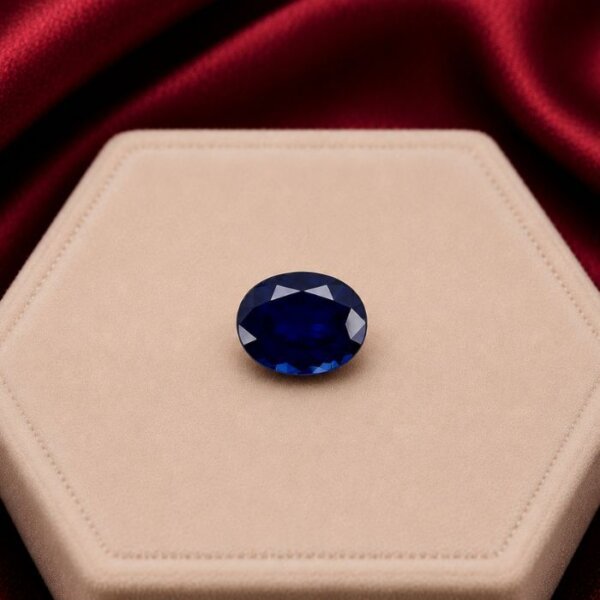
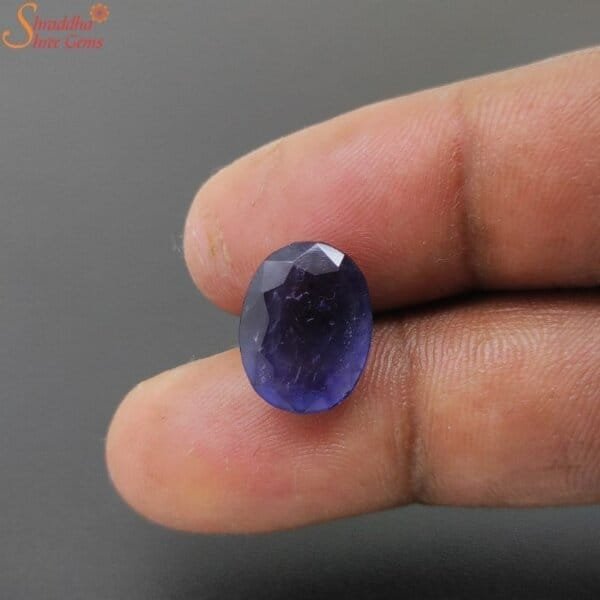
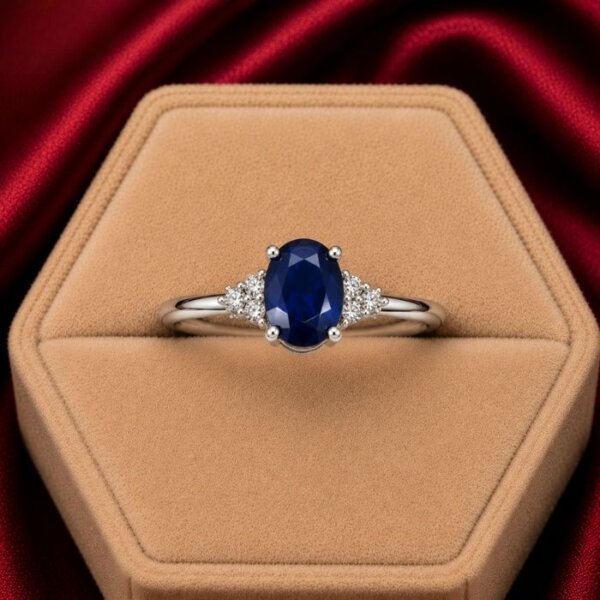
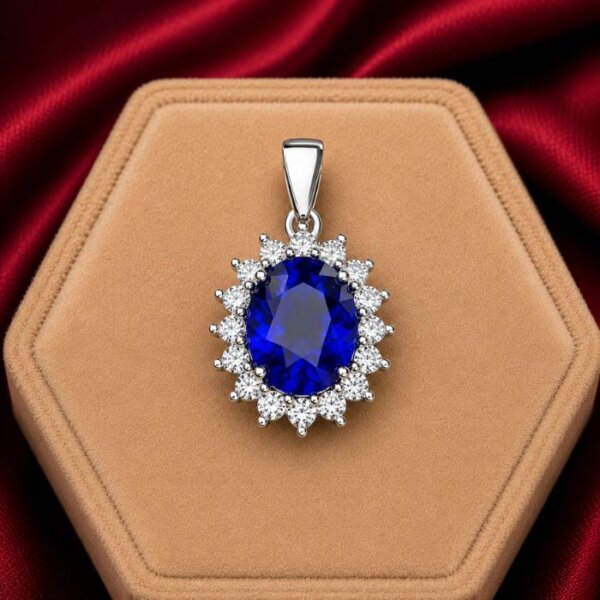
Related Products

Iolite vs Blue Sapphire for Astrology
This is an especially important distinction for Indian buyers.
Blue Sapphire and Saturn
In traditional Vedic astrology, Blue Sapphire or Neelam is associated with Shani, or Saturn.
It is traditionally recommended based on an individual’s birth chart rather than simply because someone likes the gemstone.
Because astrological gemstone recommendations are belief-based, buyers should consult a qualified astrologer if they intend to wear a gemstone specifically for astrological purposes.
What about Iolite?
Iolite is sometimes discussed in gemstone and astrology circles as a blue gemstone that may be considered by some practitioners as an alternative. However, it does not have the same established traditional status as Blue Sapphire in Vedic astrology.
Therefore, buyers should distinguish between gemological facts and astrological traditions.
Gemology can tell you what the stone is. Astrology provides a traditional framework for why someone may choose to wear it.

Iolite vs Blue Sapphire: Quality Comparison
Quality should always be assessed independently of price.
Iolite quality
When evaluating Iolite, pay attention to:
- Colour – attractive blue-violet colour is generally desirable.
- Transparency – cleaner transparent material can appear more lively.
- Clarity – visible inclusions can influence beauty and value.
- Cut – good cutting can improve brilliance and colour presentation.
- Pleochroism – orientation can dramatically influence appearance.
Blue Sapphire quality
For Blue Sapphire, evaluate:
- Colour – attractive, well-saturated blue is highly important.
- Clarity – excessive inclusions can affect transparency and appearance.
- Cut – a good cut helps maximise brilliance.
- Treatment – treatment can significantly affect value.
- Origin – consider it only when supported by reliable documentation.
- Certification – particularly useful for higher-value purchases.
Colour: Iolite vs Blue Sapphire
Colour is one of the easiest visual differences between these gemstones.
Iolite commonly displays a blue-violet or bluish-purple appearance, while Blue Sapphire is typically recognised for its blue colour.
However, lighting and viewing direction matter.
Iolite’s strong pleochroism can make it appear noticeably different when rotated. This is one of its most distinctive characteristics.
Blue Sapphire can also vary significantly in colour, from lighter blue to deeper saturated tones.
Therefore, do not judge either gemstone from a single photograph alone when making an important purchase.
Clarity: Does Higher Clarity Mean Higher Price?
Usually, clarity plays an important role in gemstone value, but gemstone clarity does not work exactly like a simple checklist.
For both Iolite and Blue Sapphire, the relationship between clarity and price depends on the overall appearance of the stone.
A gemstone with good transparency and attractive colour may be more desirable than a perfectly clean-looking stone with weak colour.
Smart buying principle
Do not pay extra for clarity that does not meaningfully improve the gemstone’s appearance.
Instead, compare:
- Colour
- Transparency
- Clarity
- Cut
- Size
- Certification
- Overall appearance
This helps you focus on best value rather than simply the highest specification.
Durability: Which Is Better for Daily Wear?
Blue Sapphire has the advantage in hardness.
With a Mohs hardness of about 9, corundum is significantly harder than Iolite.
Iolite sits around 7–7.5, which still makes it suitable for jewellery, but it requires more care than Sapphire.
For everyday rings
Blue Sapphire generally offers stronger resistance to scratching.
For occasional jewellery
Iolite can be an attractive choice when worn and stored carefully.
Regardless of the gemstone, avoid exposing jewellery to unnecessary impact, harsh chemicals or rough handling.
Certification and Authenticity
Certification becomes especially important when you are purchasing a higher-value gemstone.
A gemstone report may provide information such as:
- Gemstone identity
- Weight
- Dimensions
- Colour
- Treatment information
- Origin, where determinable
- Laboratory details
However, a certificate does not mean every gemstone is automatically equal in quality.
Two certified Blue Sapphires can have very different colour, clarity, cut and overall beauty.
The same applies to Iolite.
Before purchasing, ask:
- Is the gemstone natural?
- Has it been treated?
- Is the treatment disclosed?
- What is the exact weight?
- Are the dimensions provided?
- Is the certificate from a recognised laboratory?
- Does the report correspond to the actual gemstone?
These simple checks can prevent many buying mistakes.
How to Buy Blue Sapphire Without Overpaying
Blue Sapphire requires even more careful comparison because pricing can vary substantially.
Look closely at:
- Colour
- Saturation
- Transparency
- Clarity
- Treatment
- Origin claims
- Certification
- Cut
- Carat weight
If a seller claims a particular origin, ask whether the origin is documented by a gemstone laboratory.
Also, do not assume that a very expensive Blue Sapphire is automatically the right choice for you.
A well-selected stone that fits your budget and requirements can offer better value than simply choosing the largest available gemstone.
Common Buying Mistakes
1. Buying only by colour
A beautiful colour is important, but it is not the only factor.
2. Choosing the cheapest stone
The lowest price can sometimes reflect differences in quality, treatment, certification or appearance.
3. Assuming Iolite and Blue Sapphire are identical
They are different minerals with different properties.
4. Ignoring treatment information
Treatment can influence both value and buying decisions.
5. Buying without checking documentation
For expensive gemstones, appropriate certification can provide useful information about identity and characteristics.
6. Focusing only on carat
Two gemstones with identical weight can have very different visual quality and prices.
7. Treating astrology as a guarantee
Astrological gemstone benefits are traditional beliefs and should not be presented as scientifically proven outcomes.
Iolite vs Blue Sapphire: Which Offers Better Value?
The answer depends on your requirements.
| Buyer Requirement | Better Consideration |
|---|---|
| Lower-cost blue gemstone | Iolite |
| Blue-violet appearance | Iolite |
| Strong hardness | Blue Sapphire |
| Traditional Neelam astrology | Blue Sapphire |
| Distinctive pleochroism | Iolite |
| Everyday ring durability | Blue Sapphire |
| Budget-conscious jewellery | Iolite |
| Classic blue precious gemstone | Blue Sapphire |
The best value is not necessarily the lowest price.
For example, a moderately sized Iolite with attractive colour, transparency and good cutting may provide better visual value than a larger but dull gemstone.
Likewise, a well-selected Blue Sapphire can offer better value than an expensive stone chosen only because of its size.
Iolite vs Blue Sapphire: Final Buying Checklist
Before paying for either gemstone, check:
- Natural or synthetic status
- Treatment information
- Carat weight
- Dimensions
- Colour
- Transparency
- Clarity
- Cut quality
- Certification
- Origin documentation, if claimed
- Return/exchange terms
- Jewellery setting, if applicable
This checklist makes the buying process more transparent and reduces the chance of paying a premium without understanding what you are receiving.
Frequently Asked Questions
Is Iolite the same as Blue Sapphire?
No. Iolite is a variety of cordierite, while Blue Sapphire is a variety of corundum. They differ in mineral composition, hardness, optical properties, appearance and market value.
Is Iolite cheaper than Blue Sapphire?
Iolite is often more accessible in price than fine Blue Sapphire, but actual pricing depends on colour, clarity, transparency, cut, size, treatment, certification and overall quality.
Is Iolite a substitute for Blue Sapphire?
Iolite can be considered an alternative blue gemstone for jewellery. However, it should not automatically be treated as an equivalent substitute for Blue Sapphire in Vedic astrology.
Which is harder, Iolite or Blue Sapphire?
Blue Sapphire is harder. Sapphire has a Mohs hardness of about 9, while Iolite is around 7–7.5.
Which is better for daily-wear rings?
Blue Sapphire generally has an advantage because of its higher hardness and durability. Iolite can also be worn in rings but benefits from more careful handling.
Why is Blue Sapphire expensive?
Fine Blue Sapphire can command higher prices because of desirable colour, transparency, clarity, size, treatment status, origin and rarity. Quality varies widely between individual stones.
What makes Iolite valuable?
Iolite value depends on colour, transparency, clarity, cut, size, pleochroism and overall visual appeal. Natural, attractive material with good transparency can be more desirable.
Should I buy Iolite or Blue Sapphire for astrology?
That depends on your astrological purpose. Blue Sapphire has the stronger traditional association with Saturn. If astrology is your reason for buying, consult a qualified astrologer before selecting a gemstone.
How can I buy a genuine Iolite?
Look for clear gemstone identification, accurate weight and dimensions, transparent treatment information and appropriate laboratory documentation when purchasing a valuable stone.
Is the most expensive Blue Sapphire always the best?
No. Price alone does not determine whether a gemstone is right for you. Colour, transparency, clarity, cut, treatment, certification and personal requirements should all be considered.
Conclusion
The choice between Iolite vs Blue Sapphire ultimately comes down to purpose, budget, appearance and quality expectations.
Iolite is an attractive blue-violet gemstone known for its strong pleochroism and can be an appealing option for buyers seeking distinctive jewellery at a potentially more accessible price.
Blue Sapphire, meanwhile, offers exceptional hardness, classic blue colour and a much stronger traditional position in Vedic astrology as Neelam.
For jewellery buyers, Iolite can offer excellent value when colour, transparency and cutting are well balanced. For buyers specifically seeking traditional Neelam for astrology or a highly durable blue gemstone, Blue Sapphire may be the more appropriate choice.
Most importantly, do not choose a gemstone simply because it is cheaper or more expensive. Compare its identity, quality, certification, treatment, appearance and purpose before buying.
For buyers exploring natural gemstones in India, you can also compare available loose gemstone options and choose a stone according to your jewellery and quality requirements.
For More Information Contact Us –
+91 9711449703 or Visit Our Shop